The appeal of the art pieces displayed in the hotel lobby and Guest rooms is that they allow you to feel close to art while also experiencing the local culture and history. By looking at each piece, you can enjoy encountering new sensibilities. Why not find your favorite piece from the hotel's carefully selected art pieces and spend some time immersed in art while admiring them?
Art in the museum
KAMENOI HOTEL ARIMA / Hyogo Kobe-shi
 ①
①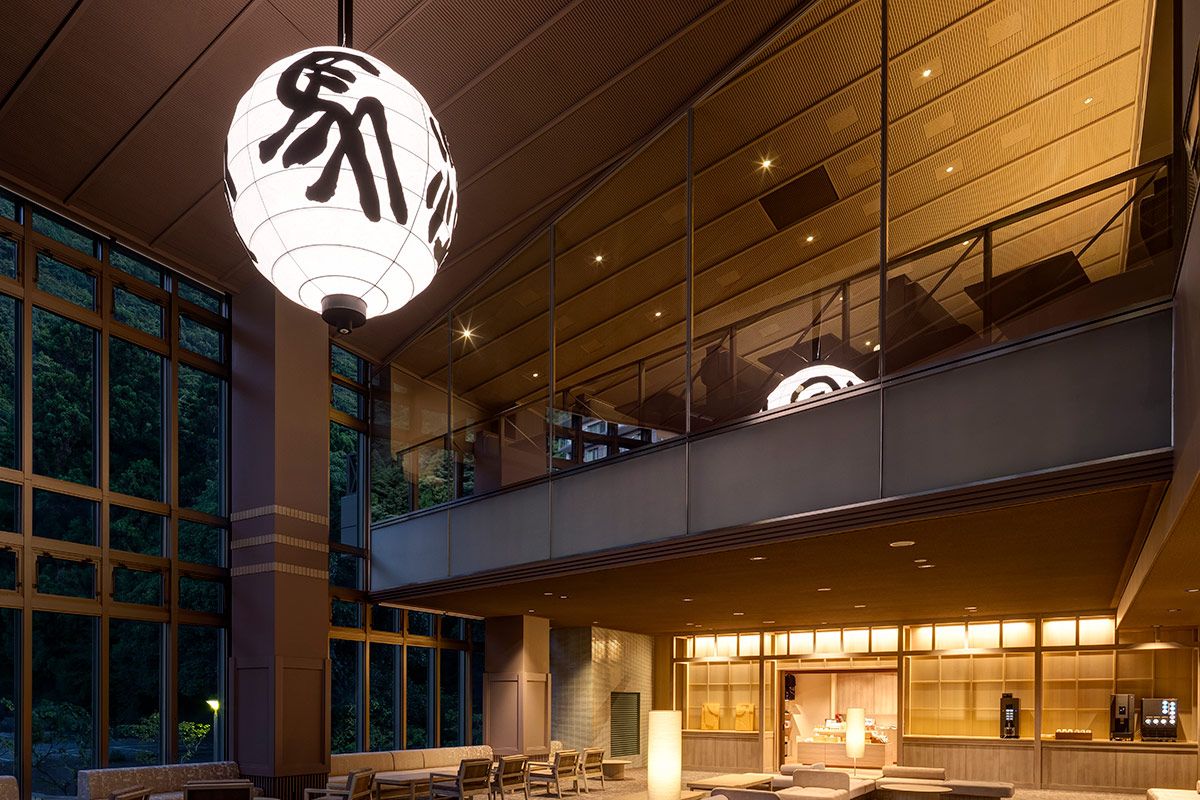 ②
②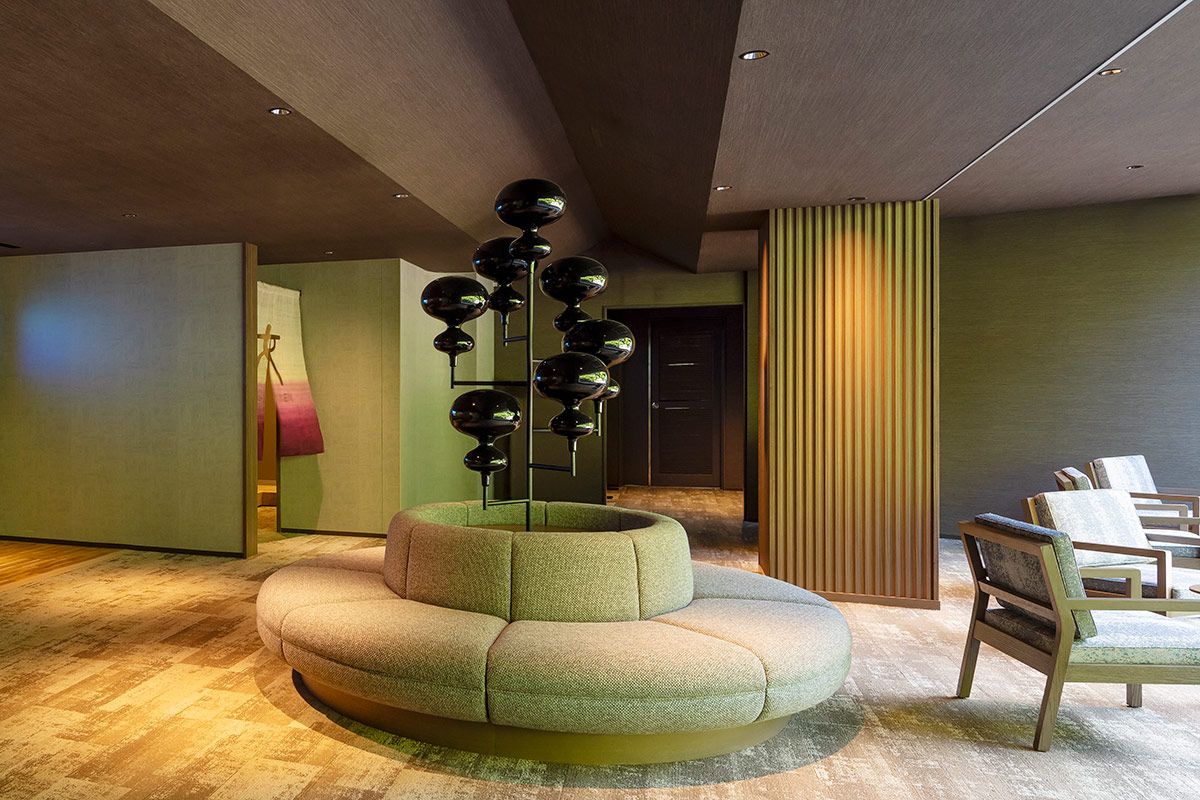 ③
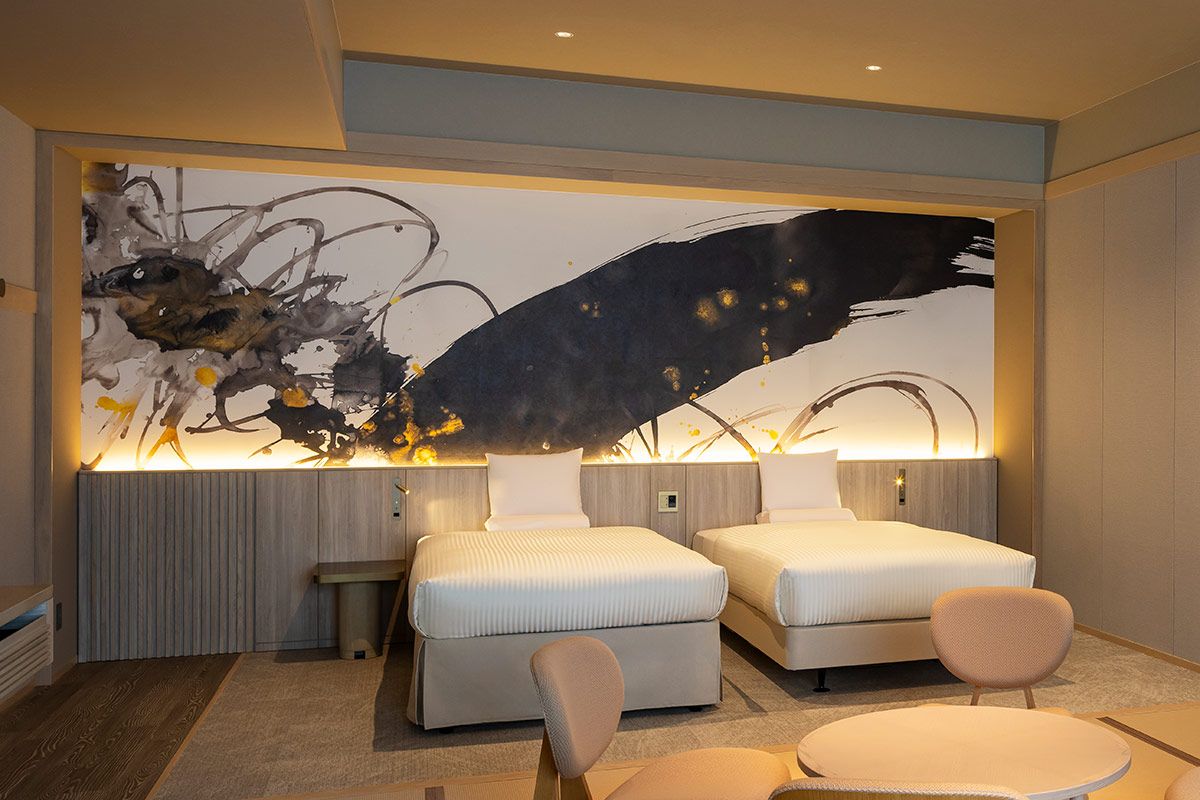
③Gold and rust colors, inspired by the famous "Kinsen" hot spring, will adorn the interior of the hotel. The art on the headboard of the Guest rooms with open-air bath is created with metallic ink, inspired by Hot springs ingredients. The lanterns decorating the lobby are also impressive. In the lounge after the bath, an objet d'art of "Sennari Hyouzu," a horse mark of Hideyoshi, associated Arima Hot springs with Hideyoshi Toyotomi, makes its presence felt.
①: Artwork on the headboard Guest rooms with an open-air bathArtist name: Sayuri
Work name: Spiral
The hotel's design concept is "gold and rust," and was created by dissolving metallic ink, evoking the elements of Hot springs. The way substances mix together is expressed in a more dynamic spiral form. The image of each substance influencing the other, but ultimately returning to its original "ideal form," is embodied in the single line of ink running down the center. The surrounding spiral vortexes that surround the central line represent the gradual passage of time.
②: Lantern logo above the lobby loungeArtist name: Sayuri
While writing the calligraphy, the author checked out several ancient fonts to express the warmth that can only be achieved through calligraphy, as well as the profoundness of the spring water that has continued since ancient times.
③: Sennari gourd sculpture in the 4th floor post-bath lounge
KAMENOI HOTEL AKO / Ako City, Ako-shi
 ①
①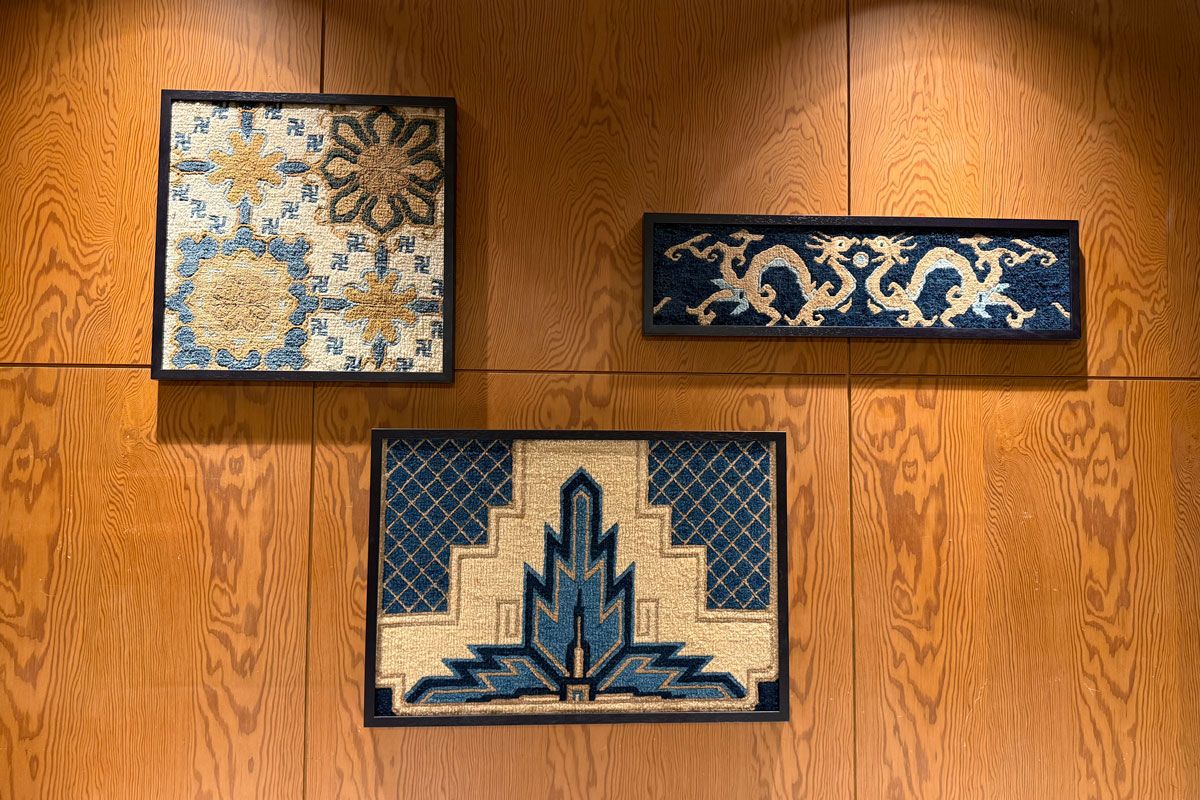 ②
②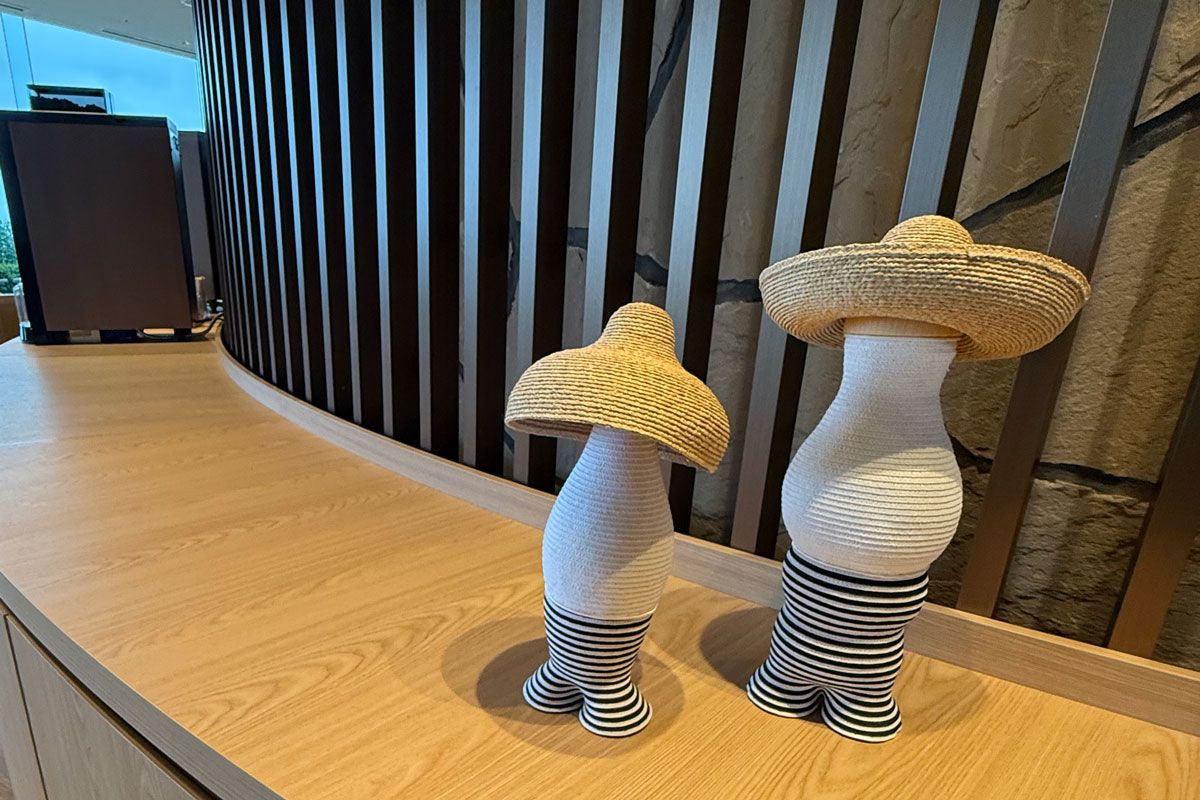 ③
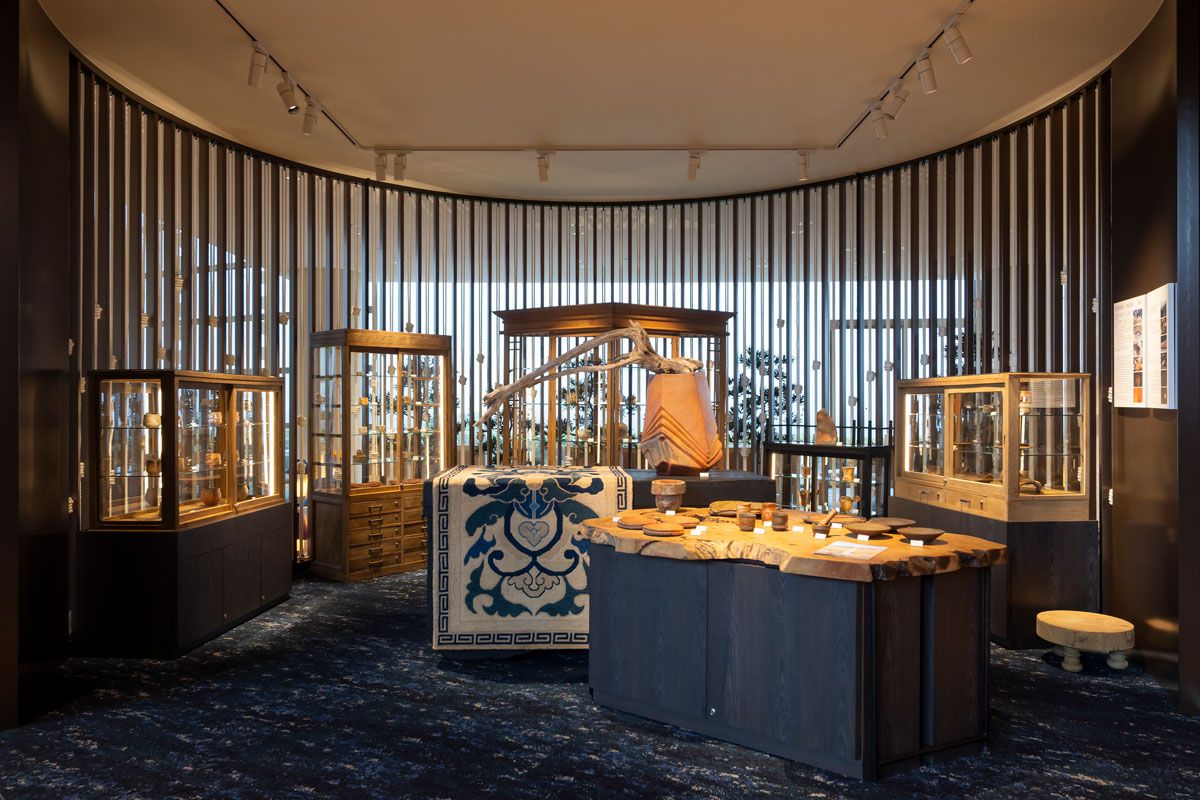
③Designs inspired by Ako 's nature, culture, and climate can be found throughout the hotel. The straw sculptures "Mobje" that line the lounge and Guest rooms are inspired by Ako 's marine life, such as jellyfish. The gallery exhibits and sells works by ceramic artist Mori Ichiro, who is pioneering new possibilities for Bizen ware. Also not to be missed are the Ako carpets, a traditional handwoven craft with a history of around 150 years. The technique of creating a three-dimensional effect by carefully cutting cotton threads is well worth seeing.
①: GalleryBizen ware Artist: Ichiro Mori
②: Ako Clouds/Chinese Flowers/Amitori SwordArtist name: Ako Dantsu June Sakagami Rie (Instagram)
③: Mobje, a straw sculptureProduced by: Fujii Hat Manufacturing Co., Ltd.
The straw hat art in Restaurant and lobby, as well as the bathroom fixtures Guest rooms, are original works exclusive to KAMENOI HOTEL AKO by Timeless Co., Ltd., which was responsible for the interior design of the hotel's renovation.
Kirishima Kokusai Hotel / Kirishima City Kagoshima
 ①
①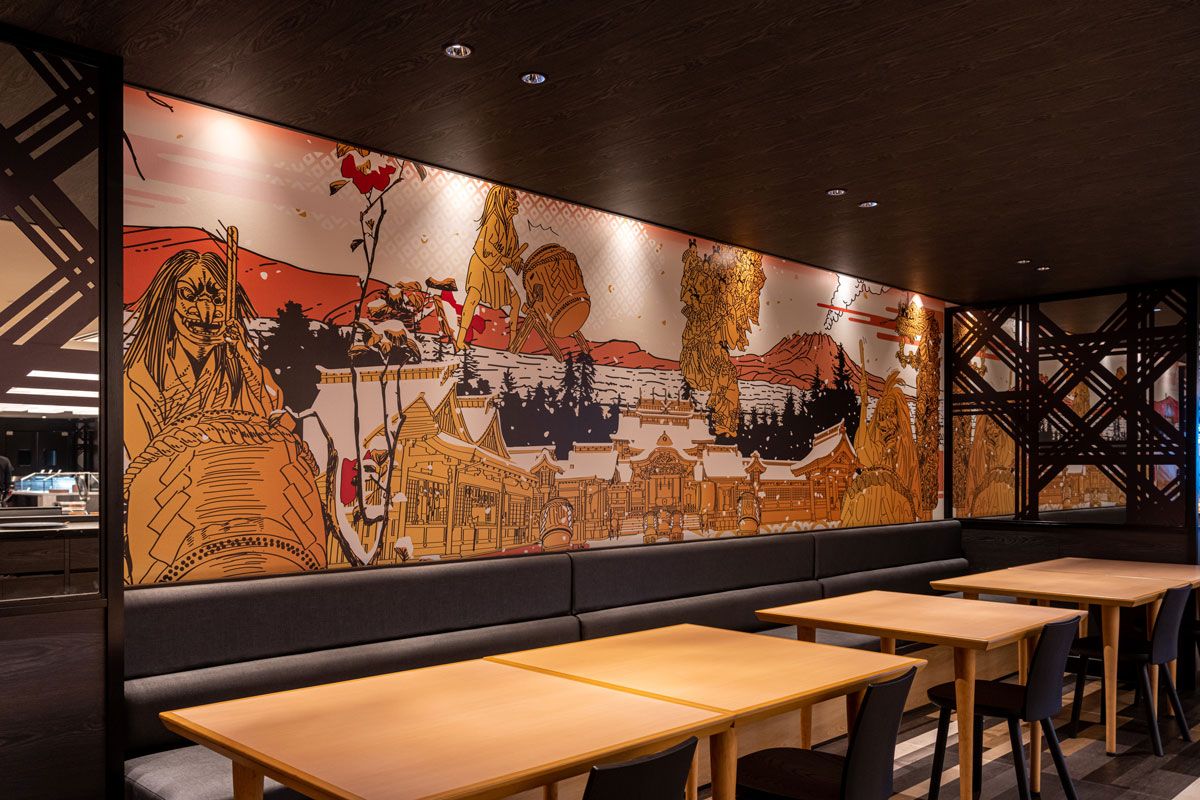 ②
②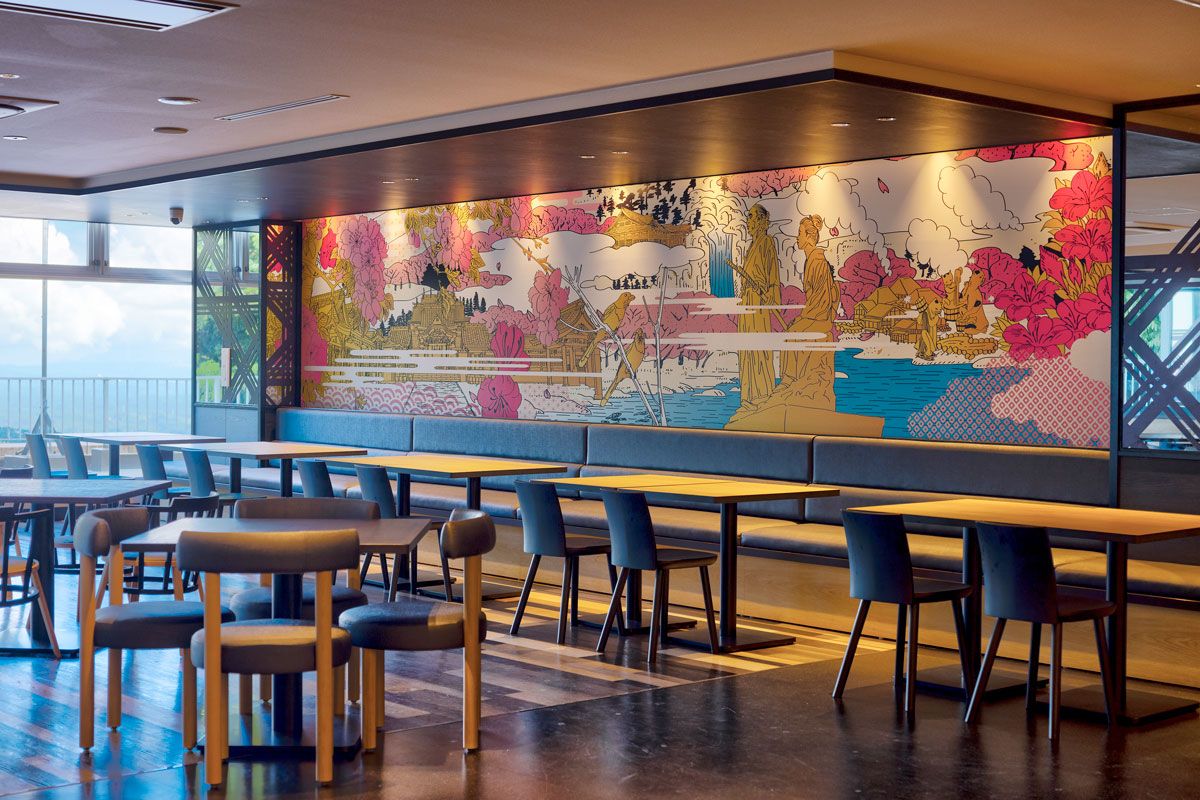 ③
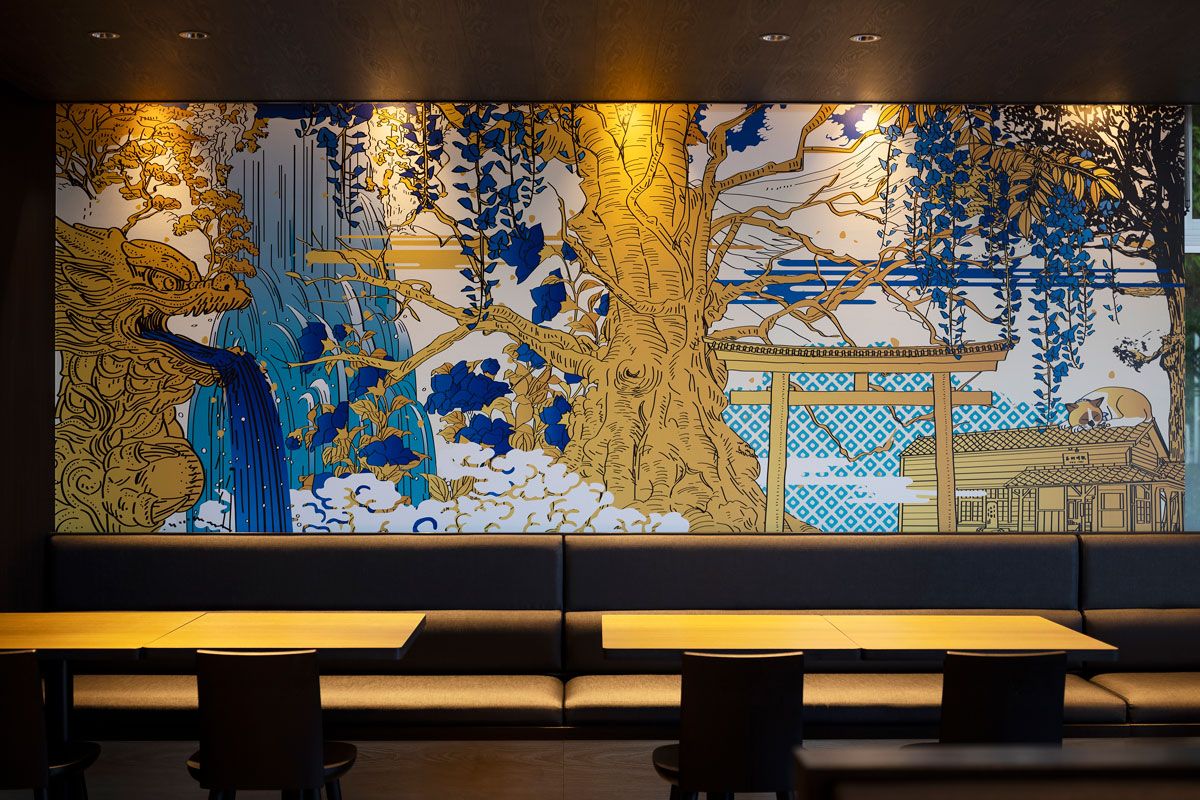
③The four paintings at the Kirishima Yukemuri Terrace Restaurant depict the changing seasons of Kirishima. Scattered throughout are local motifs unique to Kirishima, such as Sakamoto Ryoma and Oryo, who visited Kirishima on their honeymoon, the nine-faced drum, Kirishima Shrine, and Sakurajima. Through these artworks, you can discover new charms of Kirishima and enjoy a pleasure that goes beyond just viewing.
Restaurant "Kirishima Yukemuri Terrace"
Art designer Akihito Yamamura
①: SUMMERIt expresses the coolness of Kirishima. The shade of the lush trees and large trees is cool, and the pleasant breeze cools the body. The emerald green waterfall, created by the flowing river water containing Hot springs ingredients, has a fantastic, vivid color and spray that gives people a sense of coolness and healing. Even Kareigawa Station's tourism ambassador, Nyantaro, can take a comfortable nap here.
②:AUTUMN & WINTER|Autumn/WinterExpressing the solemnity of Kirishima. The Kirishima Mountain Range, Sakurajima. Many of the mountains associated with Kirishima are active volcanoes, teaching us the majesty and severity of nature. As the word "severe" can also be read as "sovereign," it embodies a solemnity that makes it seem as if the gods really exist. The Kagura dance performed at Kirishima Shrine is truly the highlight of Kirishima, the land where the heavenly grandson descended to earth.
③: SPRINGThis piece expresses the sunshine of Kirishima. Kirishima is gently tinted in the pink of Miyamakirishima and cherry blossoms. It depicts the happiest time of their lives, when Sakamoto Ryoma, a patriot of the late Edo period, and his wife Oryo are recuperating from their wounds at Shiohimizu Hot springs in Kirishima, surrounded by beautiful nature.
ART HOTEL Aomori / Aomori Aomori City
 ①
①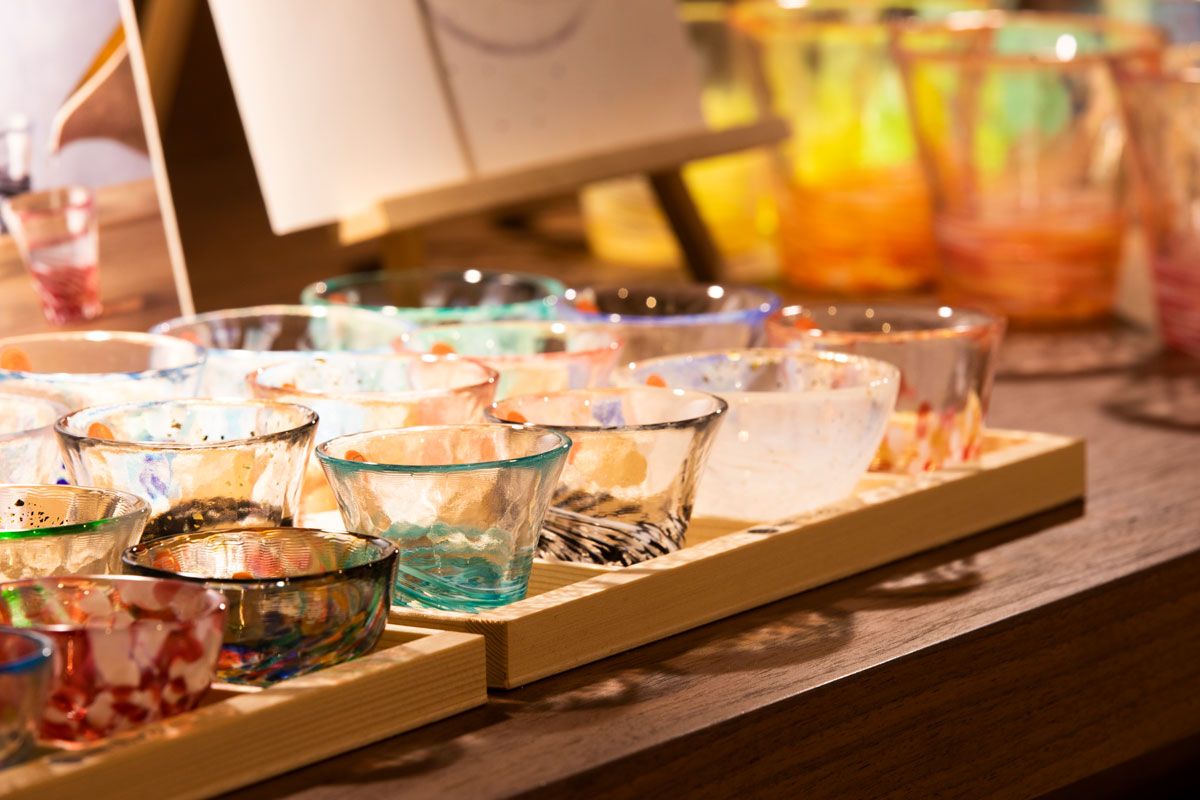 ②
②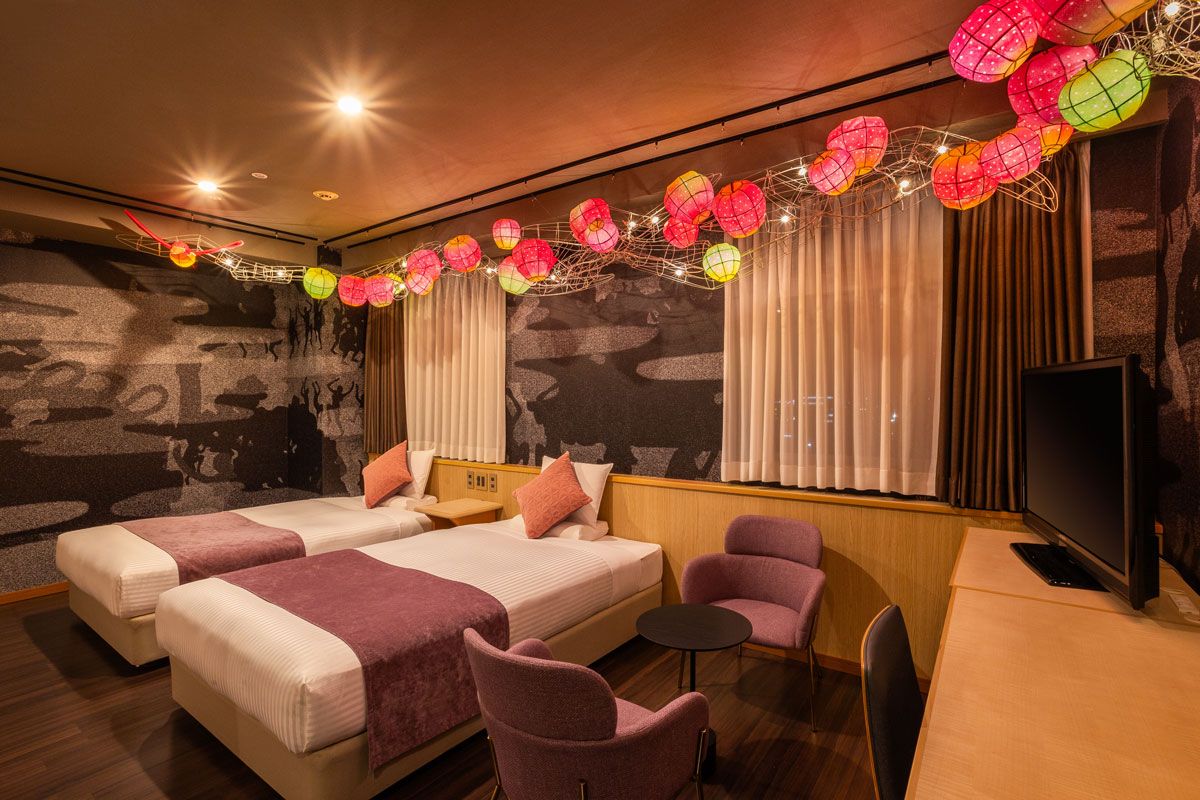 ③
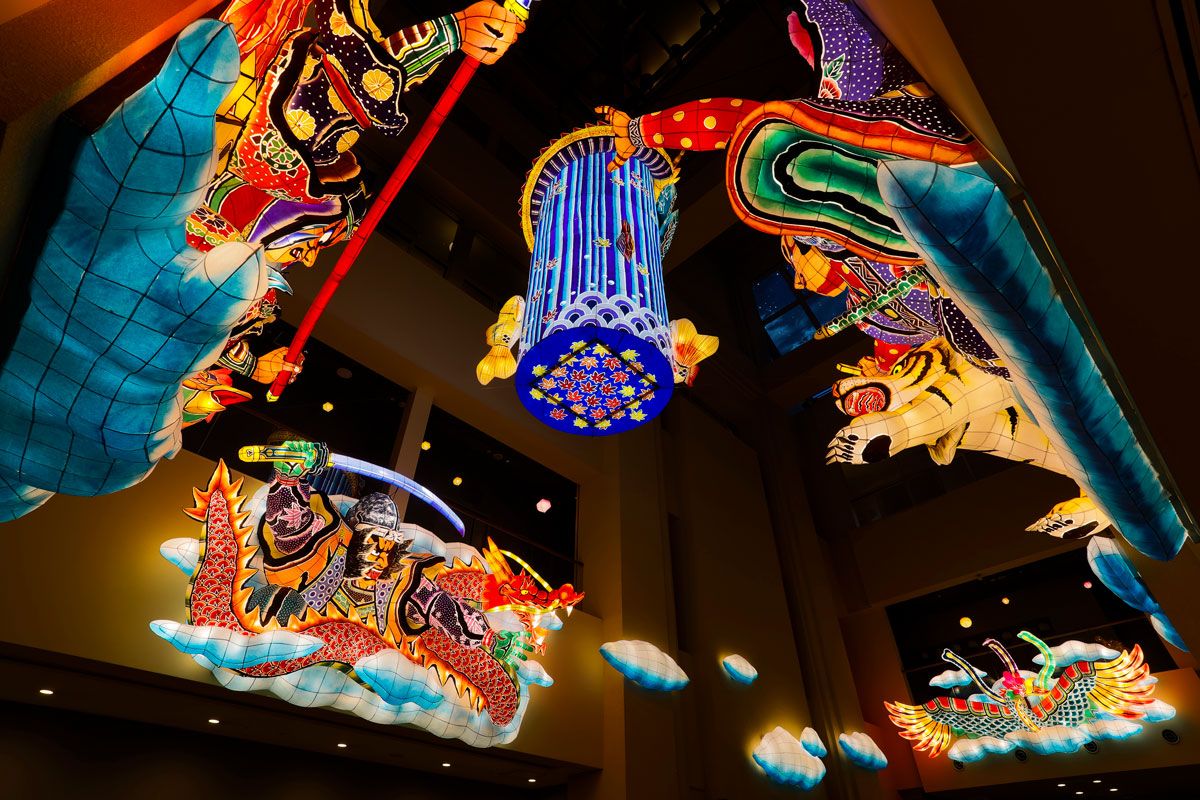
③Five "Nebuta" floats are on display in the lobby in honor of the Aomori Nebuta Festival, one of the three major festivals in the Tohoku region and designated an Important Intangible Folk Cultural Property of Japan. Crafted at half the scale of the large Nebuta, they offer a realistic feel just like the actual festival. Traditional Tsugaru crafts, "Tsugaru Vidro" and "Tsugaru Lacquerware," are also on display and for sale. The "Nebuta Twin," the first of its kind in Aomori City, is designed with a Nebuta design, allowing you to relax in a space that evokes Aomori culture.
①: You will be greeted by impressive Nebuta made by Nebuta craftsmenIn the atrium of the hotel's first floor lobby, a space that resonates with Tsugaru culture, five works by three Nebuta artists, Ryusei Uchiyama, Hiromi Hayashi, and Ryuho Tatsuta, covering the classic themes of Nebuta dolls, will be lined up.
②: Tsugaru crafts exhibition and sales cornerTsugaru glass, a traditional Tsugaru craft, is on display and for sale, with sake cups, glasses, tumblers, vases, etc. Tsugaru lacquerware is on display, with a variety of soup bowls on display, from traditional designs to colorful, modern designs.
3. "Nebuta Twin" is the first Nebuta-themed concept room in Aomori City.The Nebuta, with its Aomori apple motif, was created by active Nebuta artist Hiromi Hayashi. The lantern-like Nebuta, with its motif of apples, a representative Aomori specialty, and the vibrant bird (Ruddy Kingfisher), gently illuminates the room. The room also features wallpaper with a graphic design of dancers known as "Haneto," a distinctive feature of the Aomori Nebuta Festival.
KAMENOI HOTEL OME / Ome-shi, Tokyo
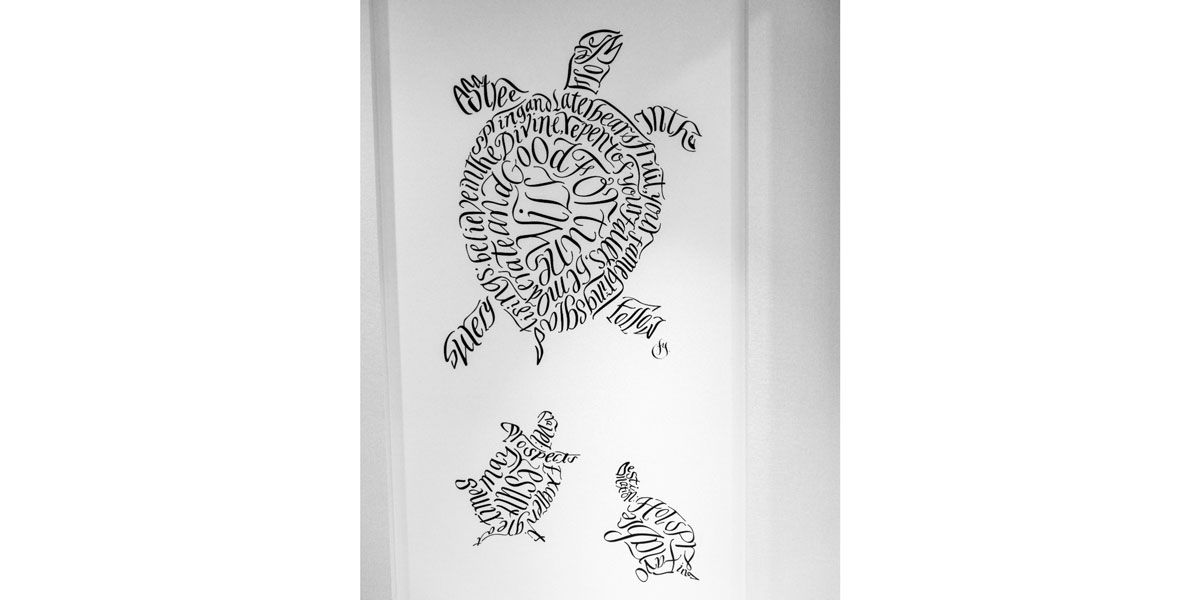
This unique piece of art features a mother and baby turtle painted in calligraphy on the wall of Guest rooms. The mother turtle is tilted upwards to the right, an auspicious sign, and is placed larger than the baby turtle, expressing strength. The letters emerging from the turtle's body spell out a message written in English. Why not enjoy some time facing the art while imagining its meaning?
Kumono Design Co., Ltd.
KAZUKI KUMONO
fRAum®︎
YOKO FRAKTUR × KAZUKI KUMONO
architecture & gardens
Former Toyozankaku Garden (formerly Tagawa Ryokan) (ART HOTEL Kokura New Tagawa) / Fukuoka Kitakyushu-shi
 ①
①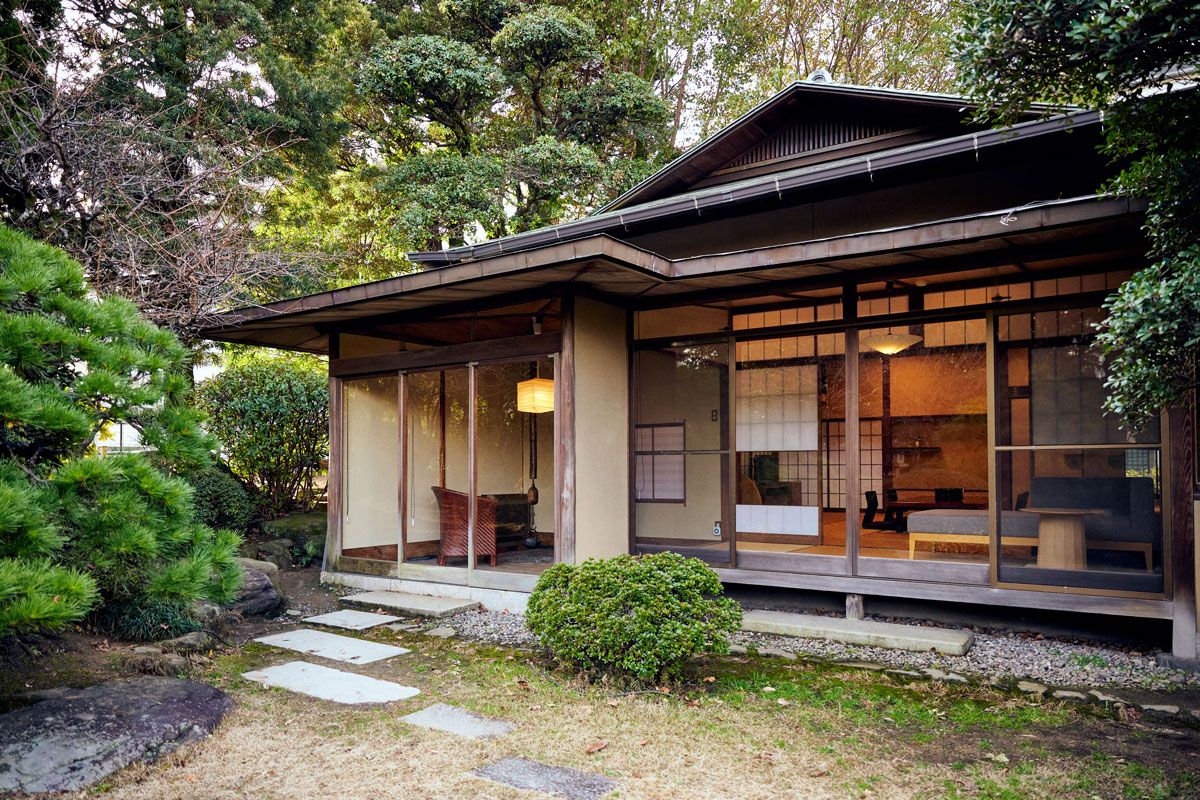 ②
②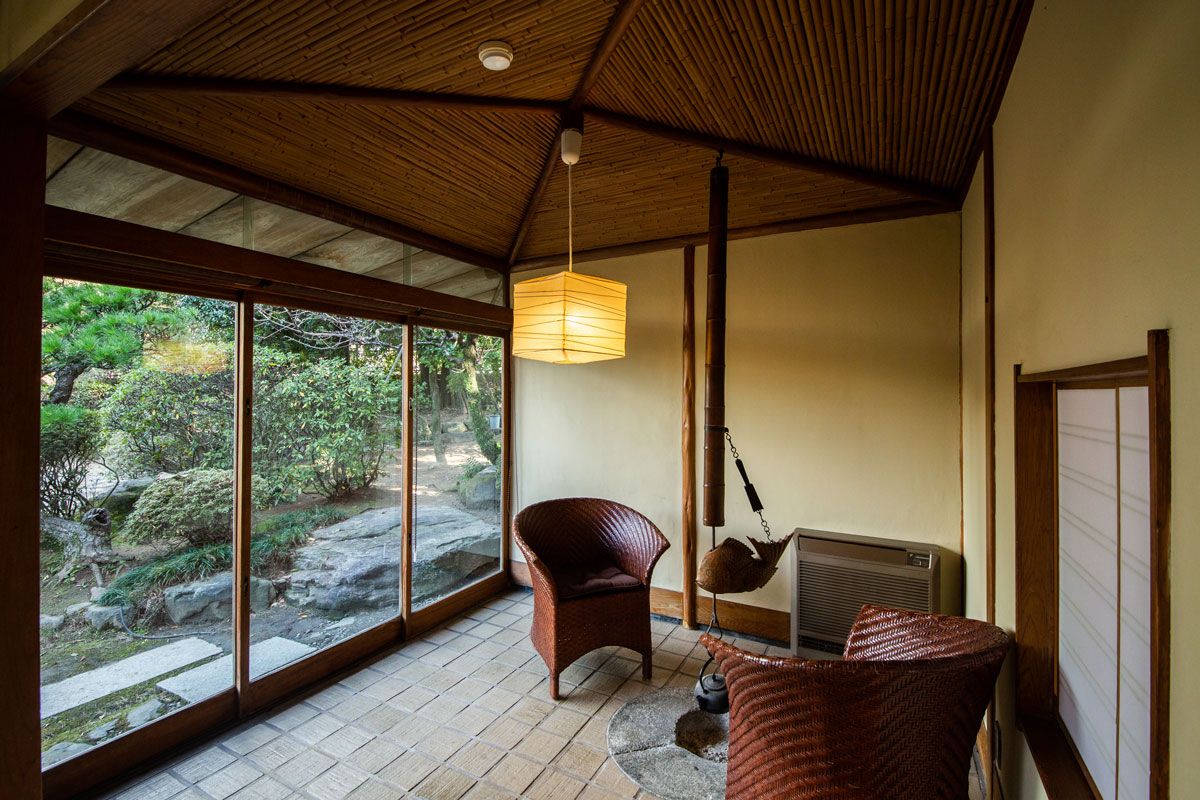 ③
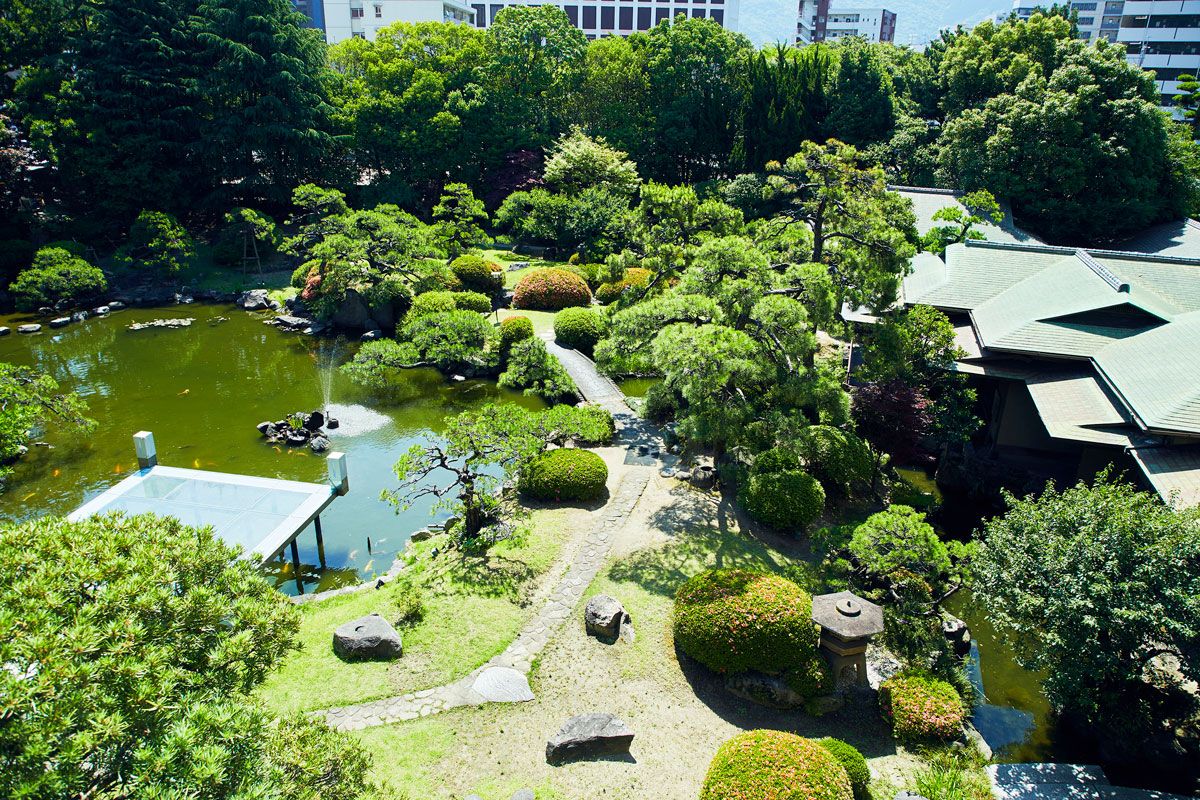
③The former Toyozankaku Garden (a registered monument), built in 1889 (Meiji 22), is a stroll-style garden with a pond and pine trees as its main feature, with Mt. Adachi as a backdrop. The detached rooms of the "Centennial Garden Inn Suisui," built in harmony with the garden, are Sukiya-style buildings and are registered tangible cultural properties: "Sugao," "Kikyu," and "Genkai." You can take a leisurely stroll and feel like you've traveled back in time.
①: Former Tozankaku Gardens (Registered Monument (Places of Scenic Beauty))A strolling garden with a pond of approximately 2,300 square meters that has stood the test of time for 130 years.
②: Suisui "Sugao" exteriorOn February 17, 2022, it was registered as a national "Registered Tangible Cultural Property (Building)."
The traditional Japanese residential style incorporates the architectural design of a tea ceremony room, and is characterized by a simple, refined design using natural materials. Guests can enjoy the traditional beauty of each of the three rooms, "Sugao," "Kikyu," and "Genkai," as well as the beautiful scenery of the "Centennial Garden," which can be seen from various angles from Guest rooms.
③: Suisui "Sugao"You can enjoy a quiet moment while looking out at the historic Japanese garden.
Yatsugatake Kogen Hutte (former main residence of the Owari Tokugawa family) (Yatsugatake Kogen Lodge) / Minamimaki Village, Minamisaku District, Nagano Prefecture
 ①
①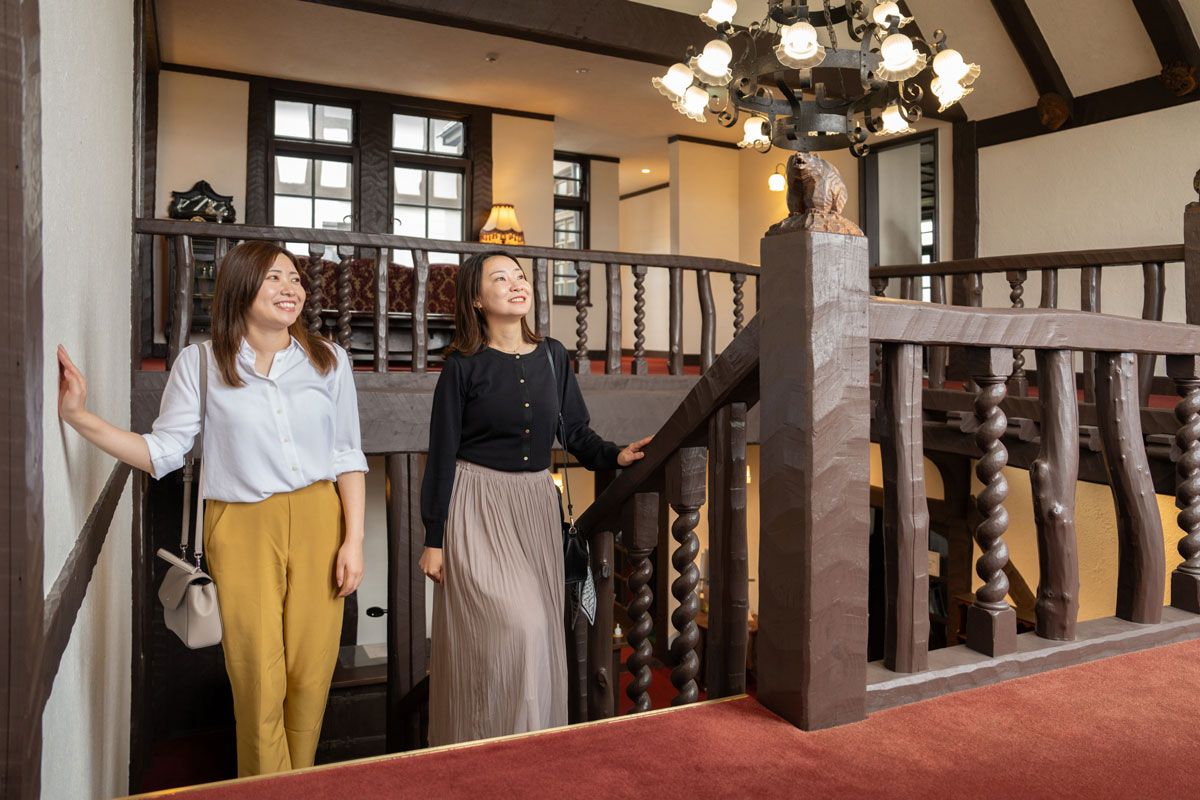 ②
②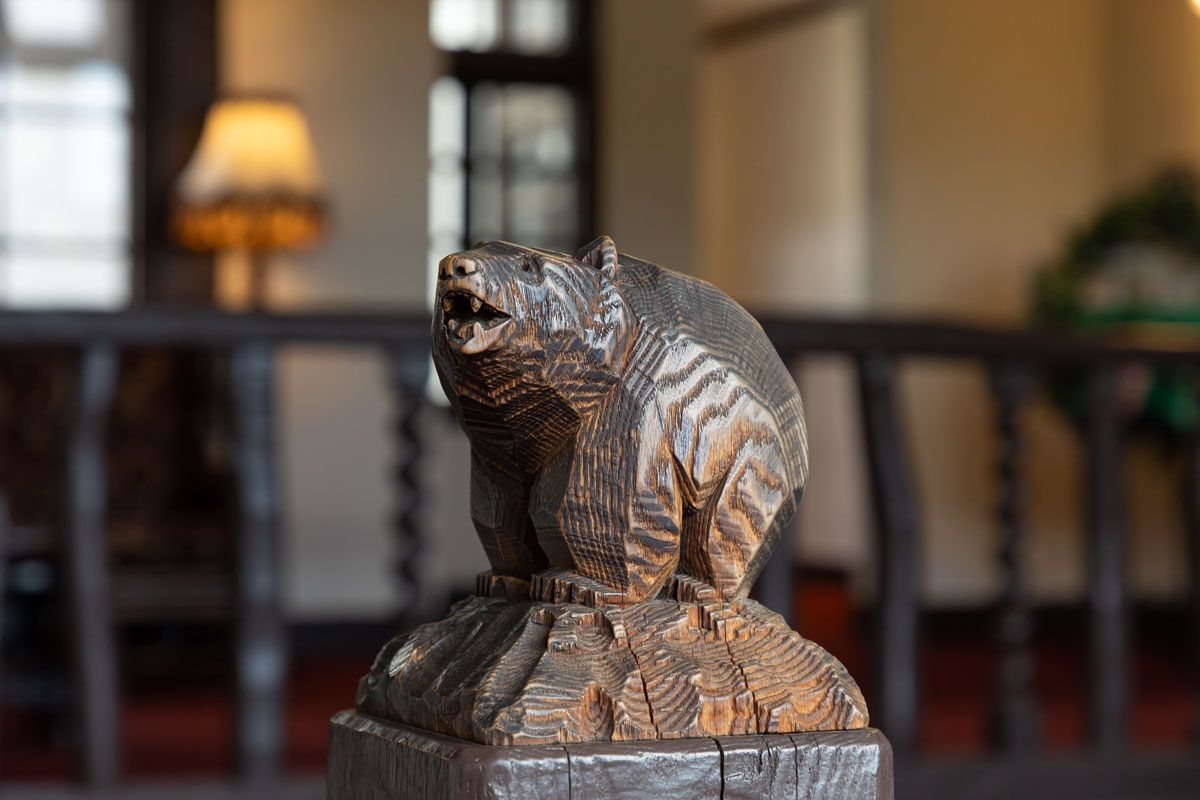 ③
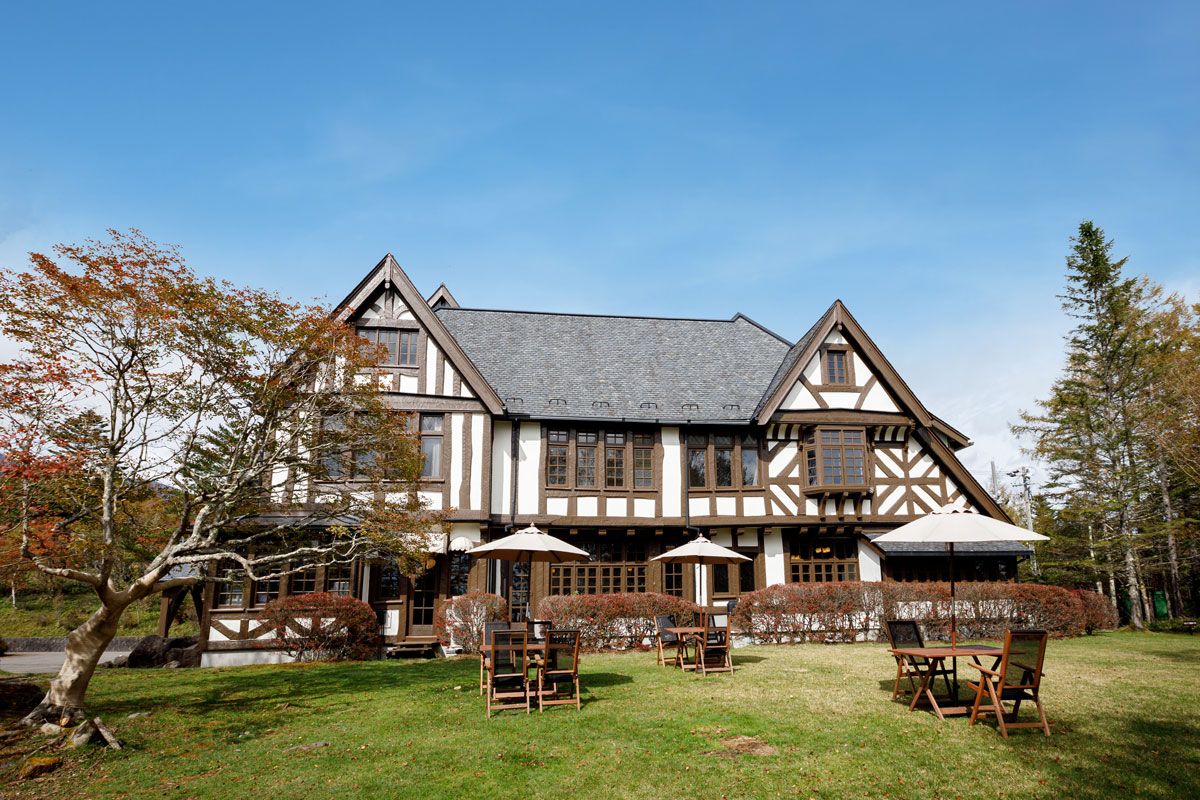
③Yatsugatake Kogen Hütte (registered tangible cultural property), the relocated residence of Tokugawa Yoshichika, the 19th head of the Owari Tokugawa clan, is characterized by its half-timbered style with exposed pillars and beams on the walls. The wooden carved bears, a classic Hokkaido souvenir, are eye-catching throughout the building and are associated with Yoshichika, who was once involved in the development of Hokkaido. Enjoy art at Yatsugatake Kogen Lodge Art Salon and the pottery studio gallery.
①: Yatsugatake Kogen Hütte (former main residence of the Owari Tokugawa family) exteriorThe building was designed by Jin Watanabe (1887-1973), who also designed the Ueno Tokyo Imperial Museum (now the Tokyo National Museum), the Dai-ichi Life Building in Hibiya, and the Wako Building in Ginza.
②: A staircase with a heavy interior
③: Wooden carved bearThere are many wooden carvings of bears on the main pillars of the stairs inside the Yatsugatake Kogen Hut. When Tokugawa Yoshichika traveled to the West in 1921, he came across bear carvings as souvenirs in Switzerland and decided to incorporate them as souvenirs in Yakumo Village. He brought back many of the carvings and shared them with the villagers and the nearby Ainu people.
Gallery
Hakodate Kokusai Hotel / Hakodate City, Hokkaido
 ①
①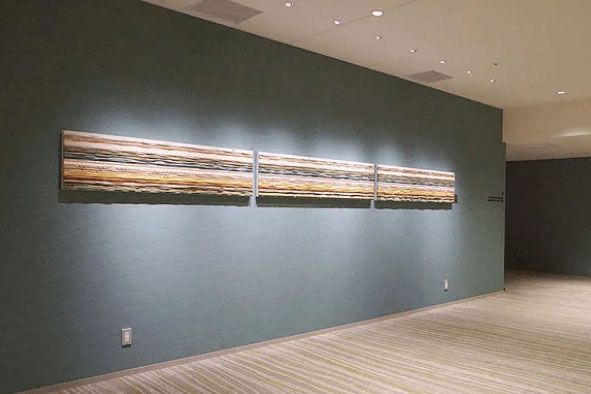 ②
②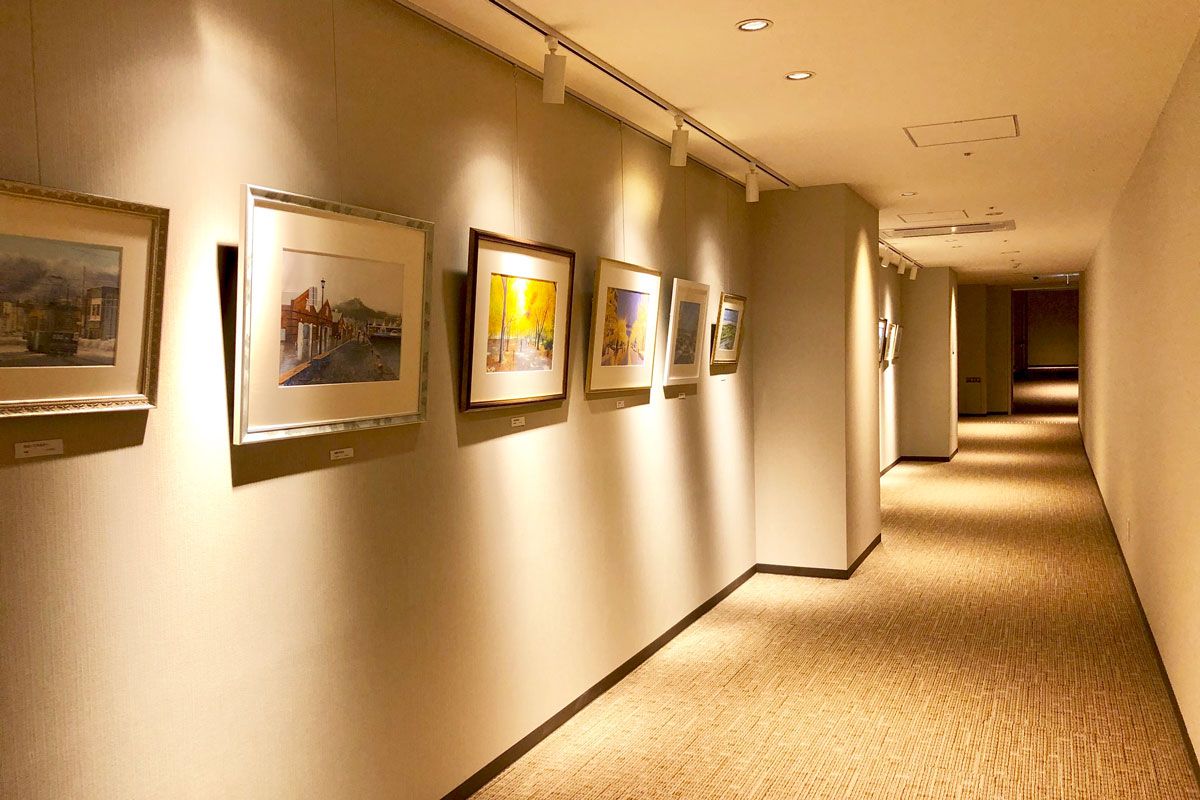 ③
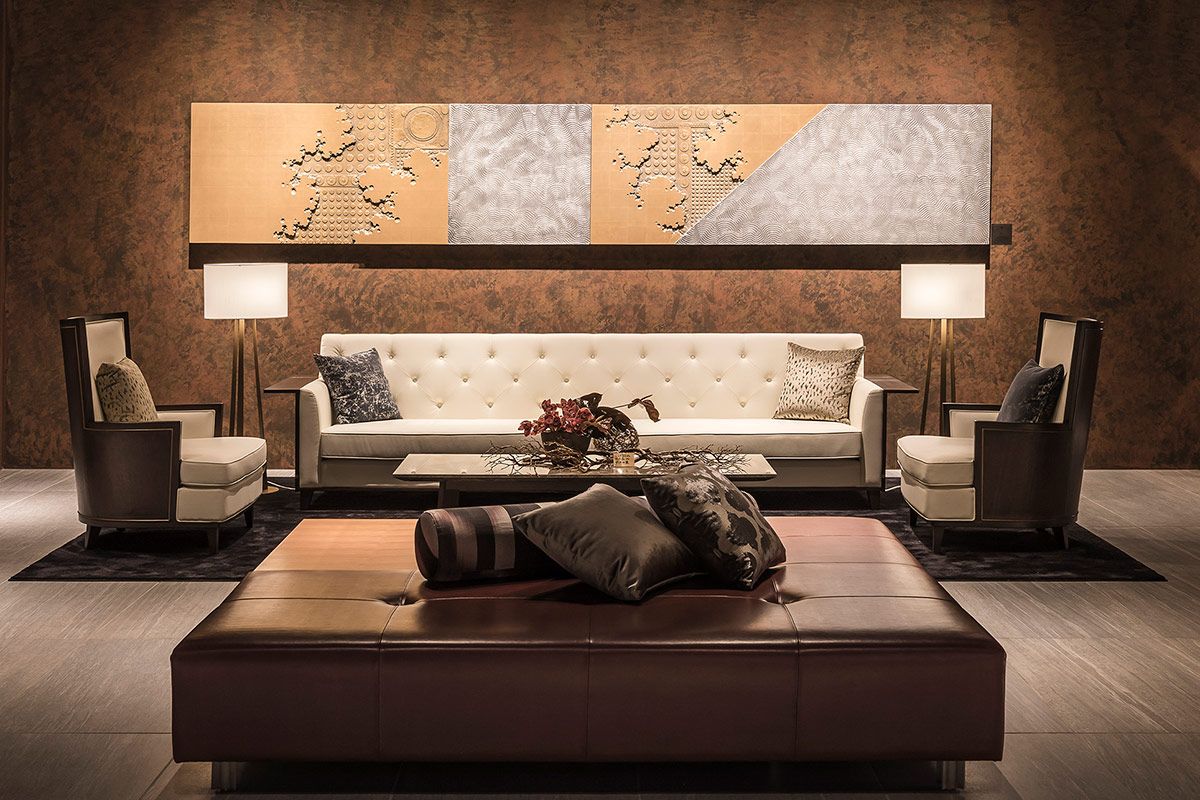
③Hakodate Kokusai Hotel displays a wide variety of unique art in the entrance lobby and corridors. The art gallery on the third floor of the connecting corridor displays over 20 paintings by Hakodate artist Sho Onishi, and the works are available for purchase. Also not to be missed is the rental gallery "Carillon," where the exhibits change every month. Enjoy a moment of art as you stroll through the hotel.
①: RAN (2018)Location: 1st floor entrance lobby
Artist: Ken Matsubara
②: Fu, fu, fu (2018)Location: 2nd floor foyer
Artist: Takenobu Igarashi
③: Art GalleryA number of artworks are lined up along the third floor corridor connecting the main building and the west building.
ART HOTEL Osaka Bay Tower / Osaka City, Osaka Prefecture
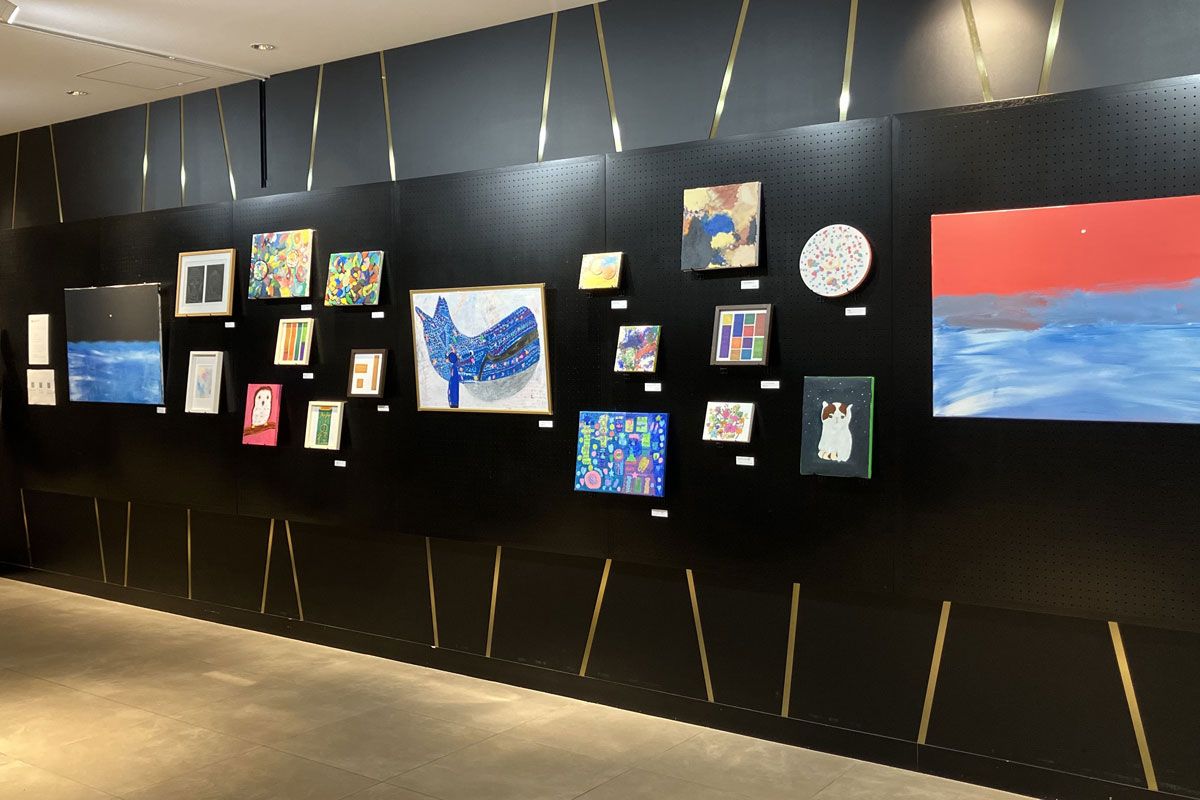
At the hotel's art space, SARAS ART GALLERY, you can enjoy discovering new art. The name "SARAS" comes from Benzaiten (Sarasvati), the goddess of art and music. Exhibits change every two to three months, so you can see works by a variety of artists and photographers depending on when you visit.
Image: Group exhibition by members of the General Incorporated Association Kurashi Lamp (Exhibition period: October 2, 2025 - December 25, 2025)
ART HOTEL Ishigakijima / Ishigaki City Okinawa
 ①
①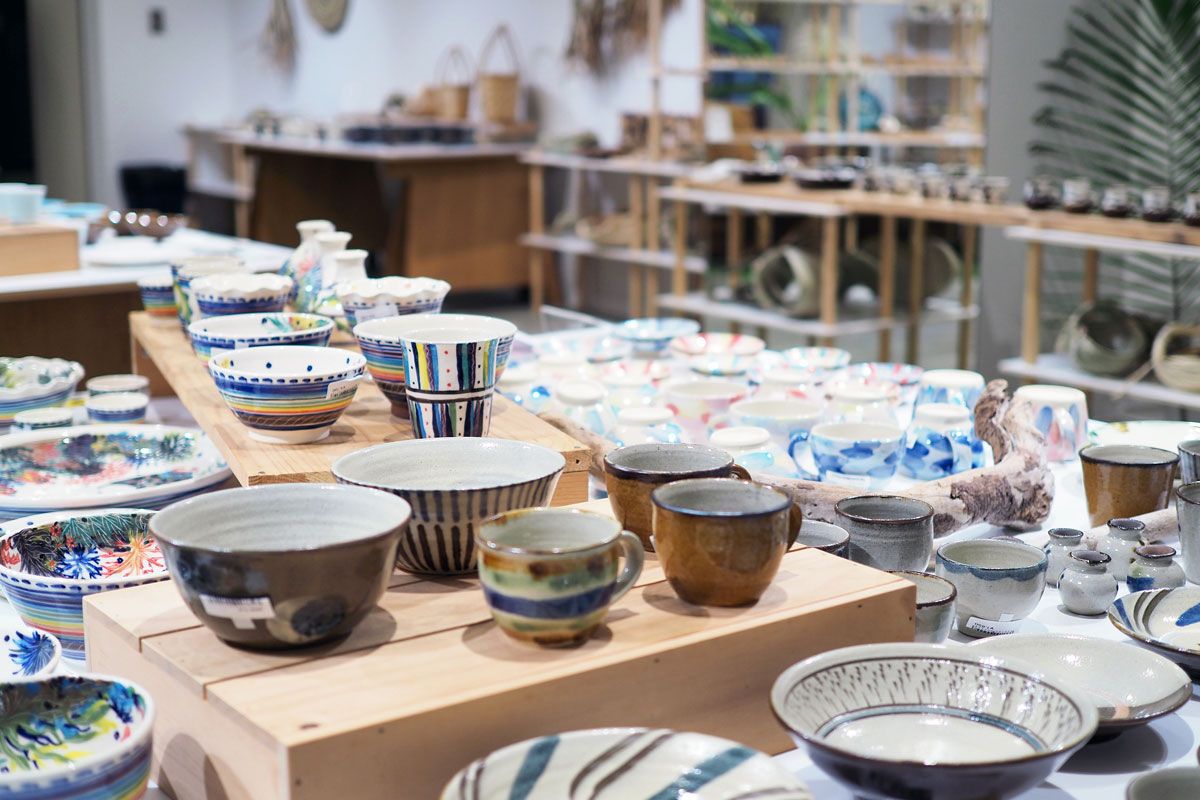 ②
②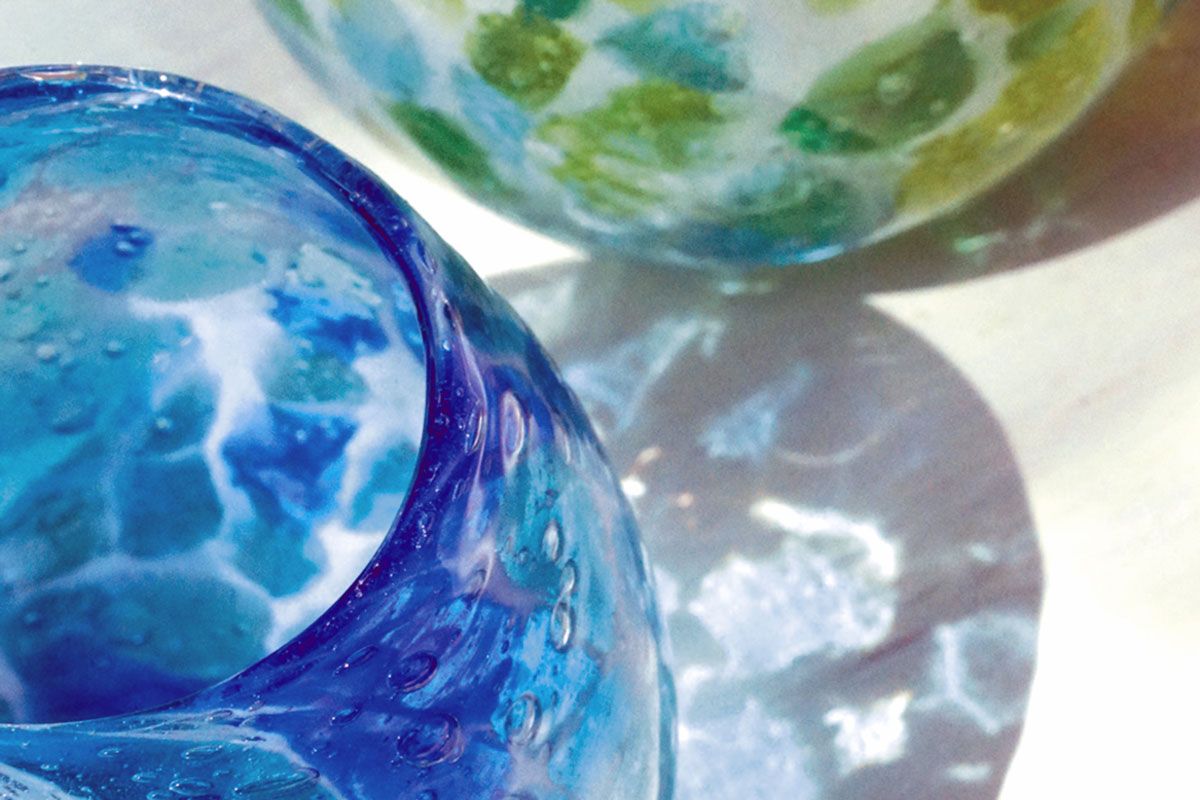 ③
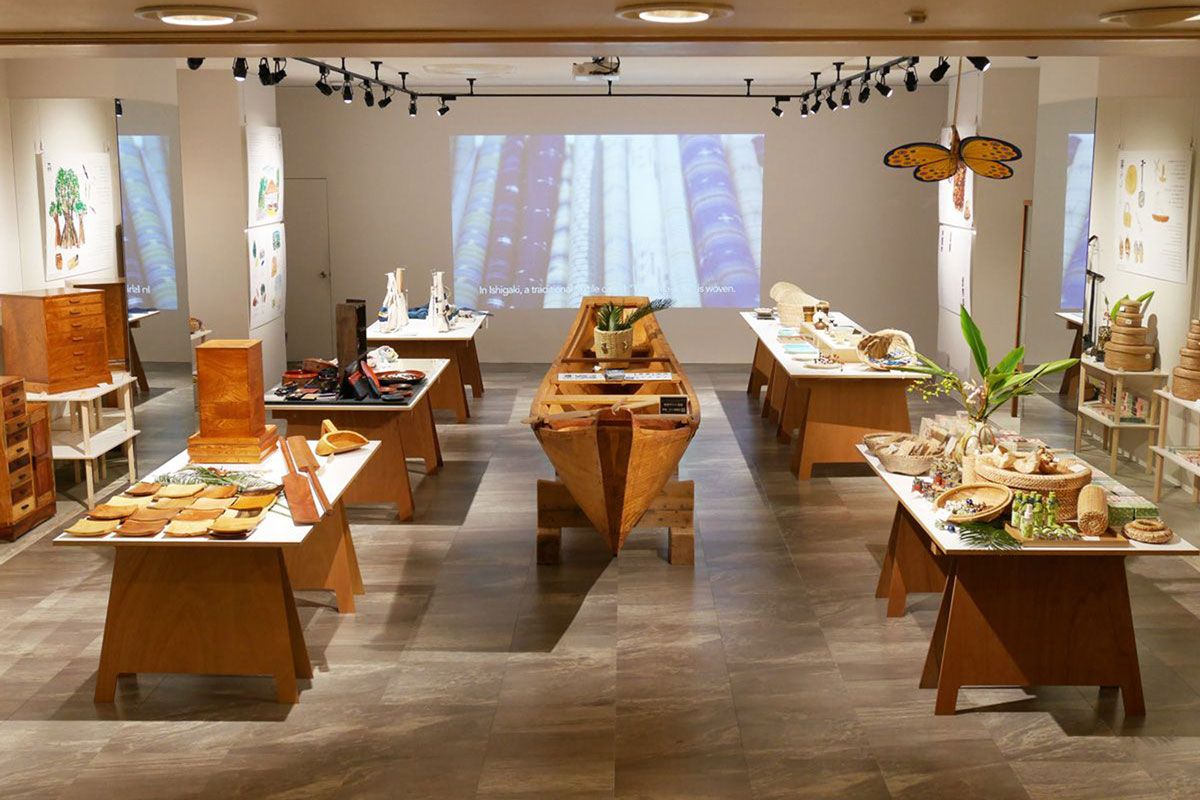
③The ART SHOP gallery on the first floor ART HOTEL Ishigakijima regularly holds special exhibitions that showcase the island's art and culture from a unique perspective.You can enjoy special exhibitions that are "fun to look at and delightful to buy" that are unique to a gallery shop.
①: The ART SHOP GalleryThis is a new concept shop that promotes the art and culture of Yaeyama, including Ishigaki Island. The gallery holds special exhibitions on a variety of creative themes, including Yaeyama art, crafts, folk art, and music.
②: Island Handicraft ExhibitionWe regularly hold the "Island Handicraft Exhibition," an event that showcases the works of artists who use the wisdom and skills passed down from our ancestors to create products that show a reverence for nature and a sense of commitment.
③: Ryukyu glass
Local Kumahachi statue
Statue of Kumahachi (7 Kamenoi Hotels) / Kujukuri, Nagatoro Yorii, Toba, Kii-Tanabe, and others *As of October 31, 2025
 ①
①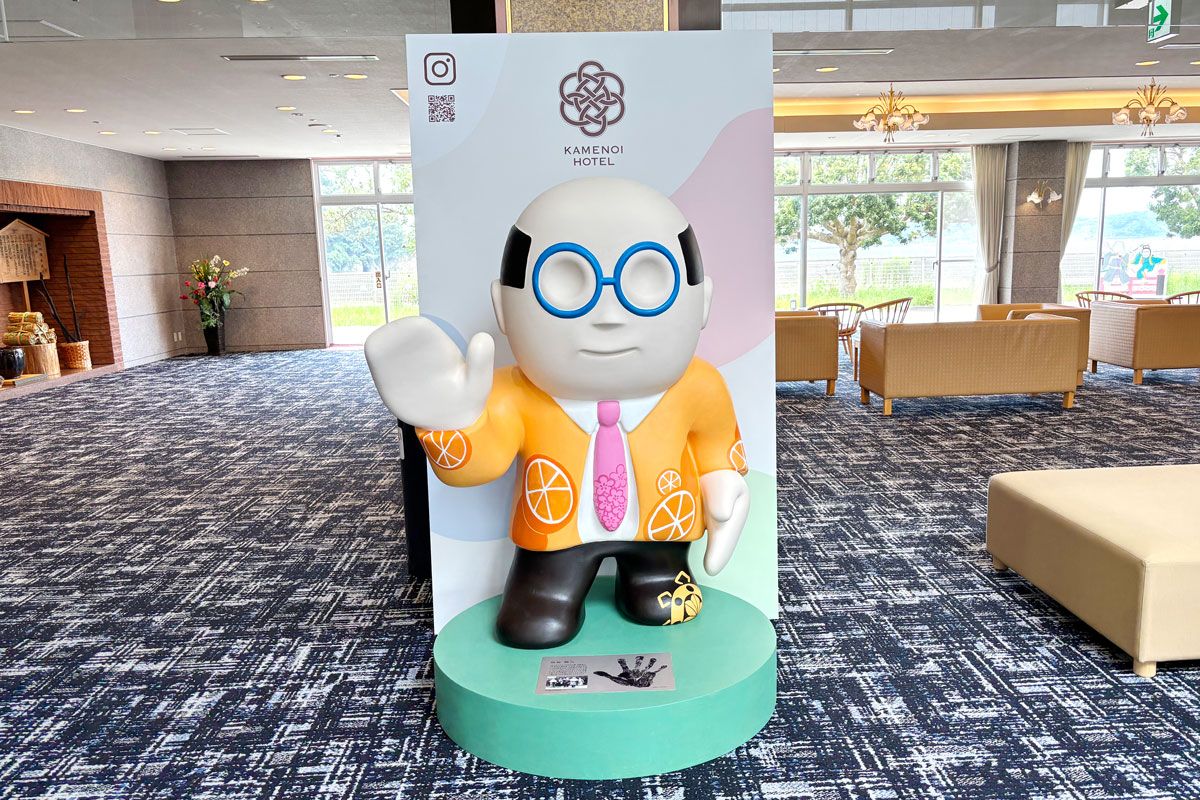 ②
②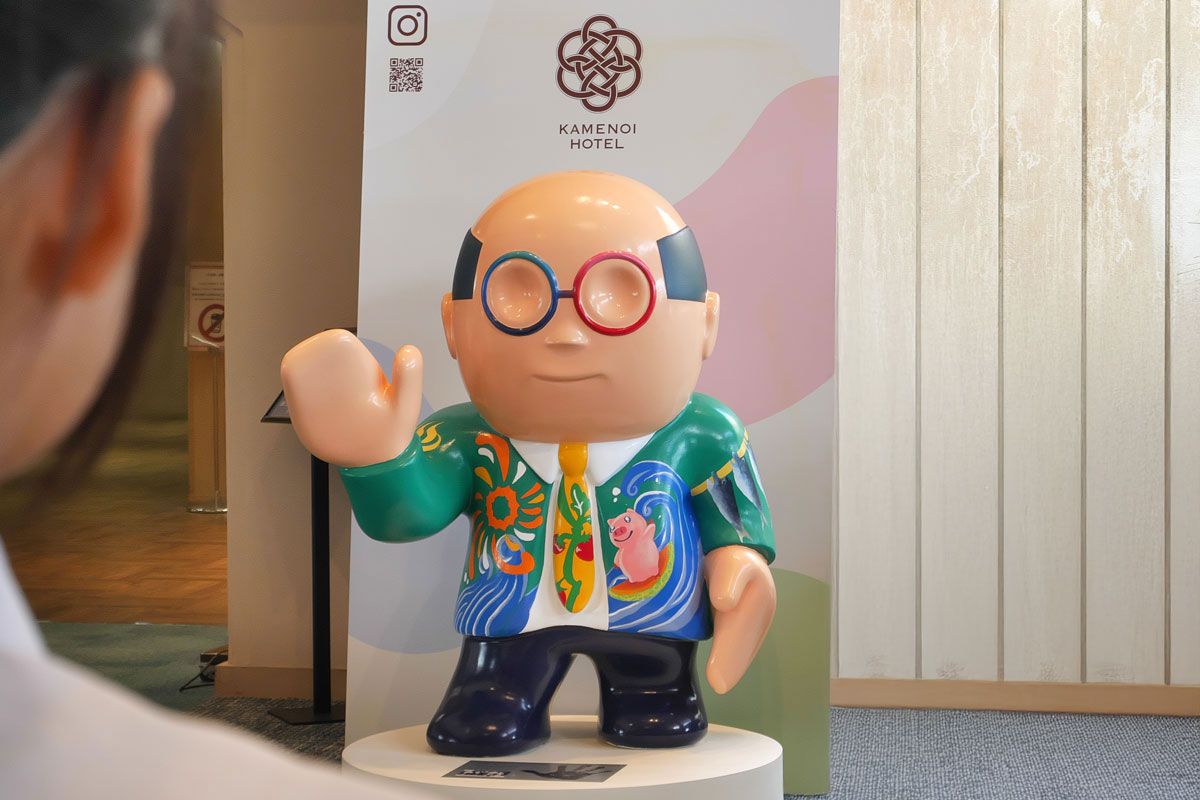 ③
③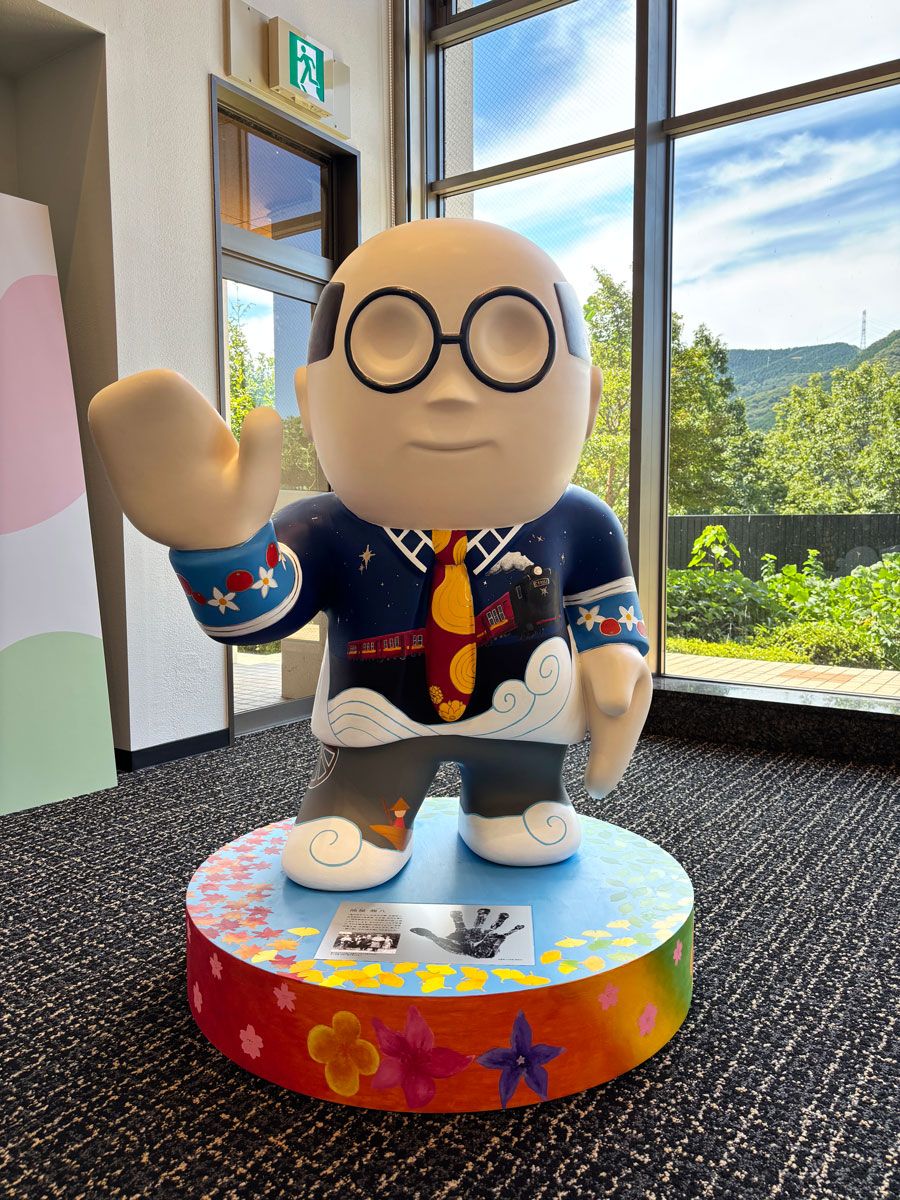 ④
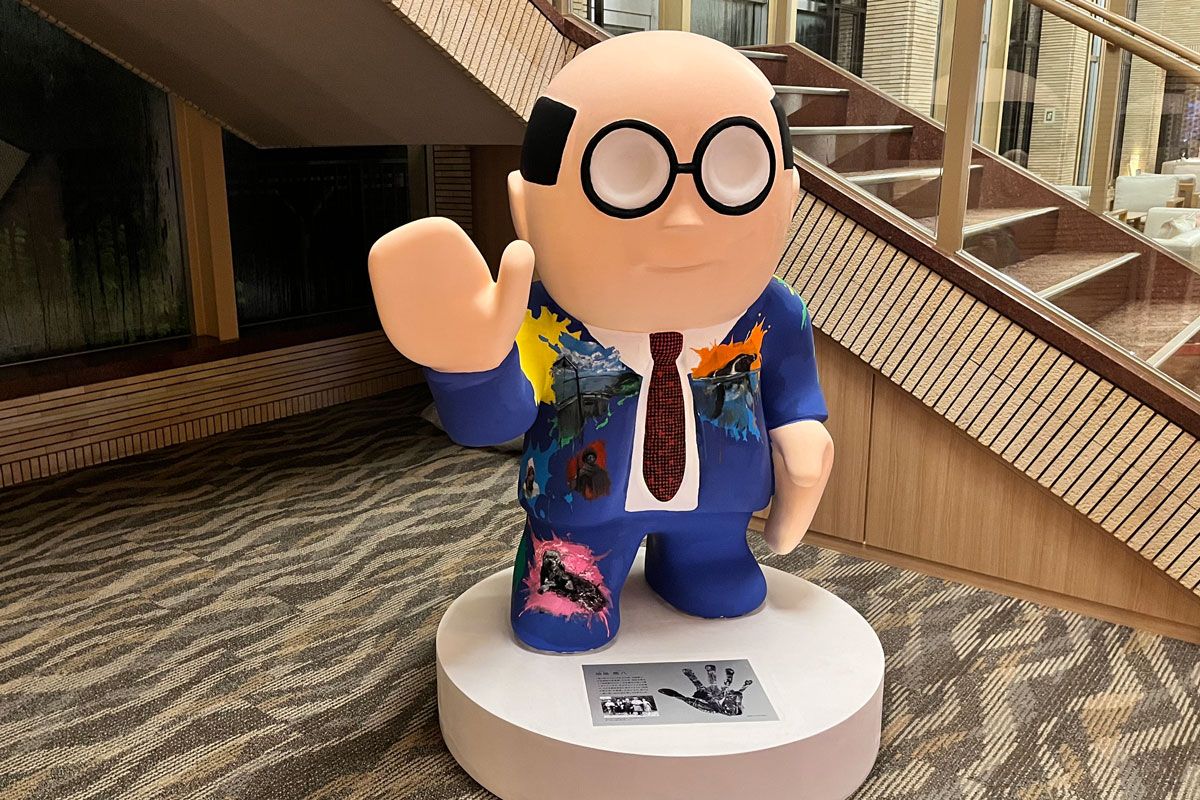
④Local high school students painted the statue of Aburaya Kumahachi, the founder of Kamenoi Hotel. It incorporates local elements and has become a symbol of Kamenoi Hotel, which aims to be a "local inn filled with tradition and warmth." For example, the statue of Kumahachi Kii-Tanabe features a Wakayama specialty, "plum" on its tie and "mandarin oranges" on its clothes. Come experience the sensibilities of young people through the unique Kumahachi statue.
①: KAMENOI HOTEL TOBA × Mie Prefectural Toba High SchoolThe artwork depicts various creatures at Toba, such as sea otters, penguins, and dolphins, as well as ships moored at Toba Port, female divers, and the famous pearls.
②: KAMENOI HOTEL KII-TANABE × Wakayama Tanabe High SchoolThe design features plums and mandarin oranges, which are Wakayama specialties.
③: KAMENOI HOTEL KUJUKURI x Chiba Prefectural Sosa High SchoolThe green jacket is inspired by agriculture, and features marine-related industrial products symbolically placed on it. The "Hot springs mark" representing Kamenoi Hotel is subtly placed on the jacket.
④: KAMENOI HOTEL NAGATORO YORII × Saitama Prefectural Yorii Johoku High SchoolThe designs include the Arakawa River, a symbol of the region, as well as the boat floats and fireworks of the Yorii Tamayodo Suitengu Festival.